Keep a live sales dashboard without touching HubSpot every morning
Pull fresh deal data out of HubSpot on a schedule, enrich it with quick company research, and refresh a Google Sheets dashboard your team already checks.
What this looks like
One step on screen at a time. Read it, do it, tap Next.
Keep a live sales dashboard without touching HubSpot every morning
Step 1 of 12
Trigger on a schedule
Create a workflow and add a Schedule Trigger running every hour during your working day. A live-feeling dashboard doesn't need to update every minute — hourly is plenty for pipeline data.
Checkpoint
A Schedule Trigger sits on the canvas set to run hourly.
Before you begin
Tick these off as you sort them. Stopping halfway to create an account is how a fifteen-minute build becomes an hour.
0 of 8 ready
Ticks are saved on this device, so you can come back to them.
- Account
You need at least one active pipeline with real or test deals so there is something to sync.
- Credential
Set this up with read access to deals, companies and contacts before building the workflow.
HubSpot private apps - API keyOptional
Used to pull a short public summary of each company from their website for extra dashboard context.
- Have ready
Columns: DealName, Company, Stage, Amount, CloseDate, Owner, Summary. Consider a separate tab with pivot charts reading from this raw data tab.
- Know-how
You'll reference these directly in a filter step, so copy them exactly as HubSpot spells them.
- Time
The HubSpot and Sheets parts are quick; most of the time goes into deciding what the dashboard should actually show.
The basics — ticked once, remembered everywhere
- Account
Either the hosted version or a self-hosted install. Everything here works the same on both — the only visible difference is the shape of your webhook URLs.
Create a workspace - Know-how
Adding a node, connecting two of them, and pressing Execute. If any of that is new, the free primer covers it in about ten minutes.
- Credential
You will paste at least one secret during setup. A password manager beats a notes app, and it stops you pasting a live key into a chat window by accident.
The shape of the workflow
The nodes you will end up with, left to right, in the order you add them.
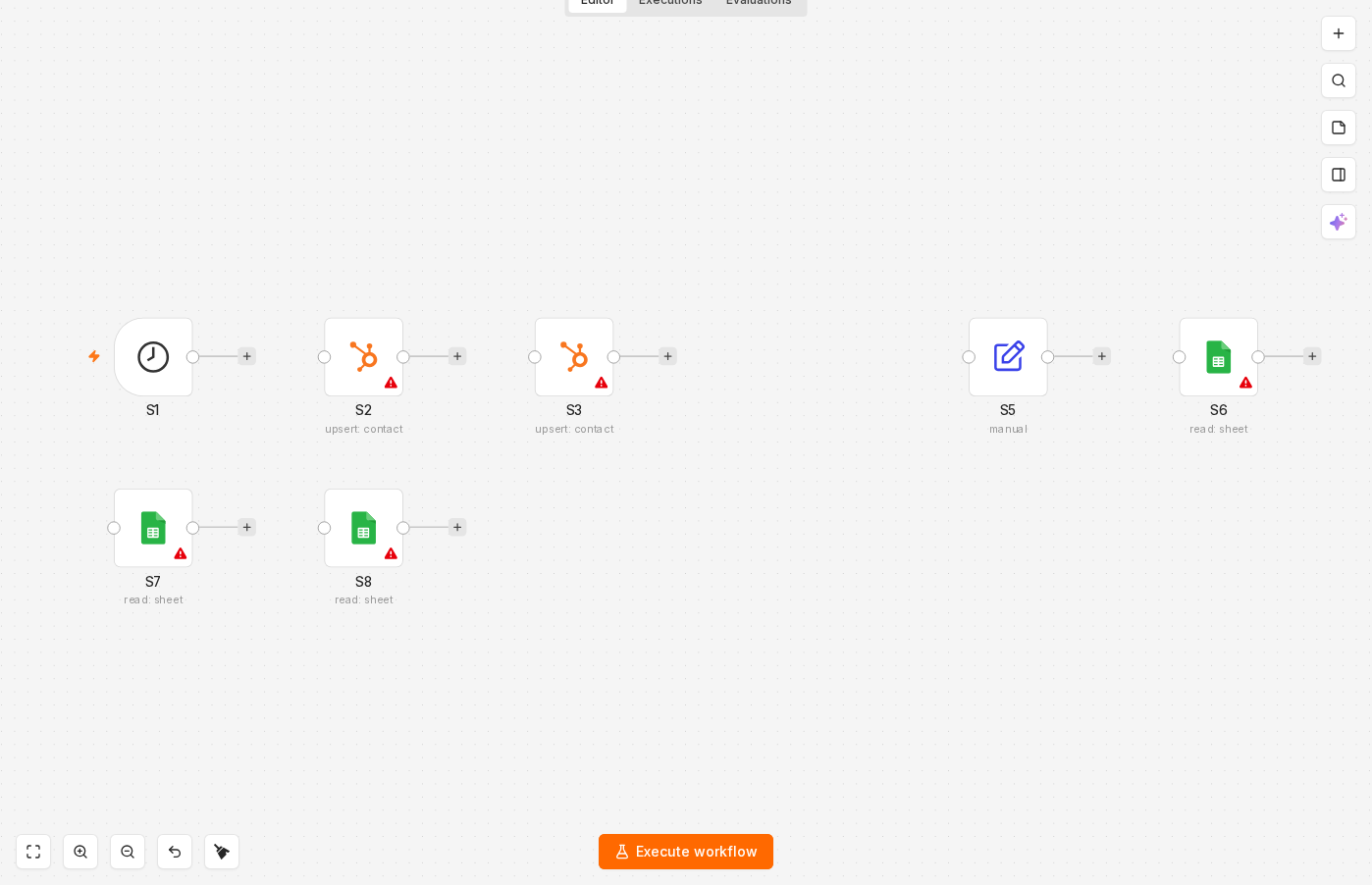 4 things to set here
- 1Schedule Trigger — the trigger — everything starts here
- 2HubSpot — Fetch open deals from HubSpot
- 3HubSpot — Fetch the associated company for each deal
- 4ScrapeGraphAI — Pull a short company summary
Skip the node hunting
Import a starter file with every node for this build already on the canvas, named after its step and wired in order, each one carrying a sticky note with the values to enter. You still connect your own accounts and fill the fields — that is what the walkthrough takes you through — but you never start at a blank canvas.
In n8n: Workflows → Import from file.
What you will build
Jump straight to any step, or print the list and tick it off beside your n8n tab.
- 1Trigger on a schedule
- 2Fetch open deals from HubSpot
- 3Fetch the associated company for each deal
- 4Pull a short company summary
- 5Shape the row for the dashboard
- 6Clear last hour's rows
- 7Write the fresh deal rows
- 8Timestamp the last sync
- 9Activate the workflow
- 10Compare row count to HubSpot
- 11Move a deal to Closed Won
- 12Check chart tabs still work
If something goes wrong
Everything ready?
Start walkthrough