Tailor your CV to a job description automatically
Paste in a job description and your base CV, and get back a tailored, ATS-friendly version highlighting the right keywords and experience — exported as a ready-to-send PDF.
What this looks like
One step on screen at a time. Read it, do it, tap Next.
Tailor your CV to a job description automatically
Step 1 of 12
Start with a manual trigger for a job description
Create a workflow with a Form Trigger (or Manual Trigger while testing) that captures the job description text and a link to your base CV, so you can run this whenever you spot a role worth
Checkpoint
Submitting the form produces an item with the job description text.
Before you begin
Tick these off as you sort them. Stopping halfway to create an account is how a fifteen-minute build becomes an hour.
0 of 9 ready
Ticks are saved on this device, so you can come back to them.
- Have ready
This should contain your full history — every role, achievement and skill you might want to draw on — even if it's longer than a normal CV.
- Account
The tailored CV is built as a Google Doc, then exported to PDF via Drive.
- Have ready
A clean, ATS-friendly layout with placeholder sections for summary, experience and skills that the workflow will fill in.
- Know-how
Applicant tracking systems mostly look for exact keyword overlaps with the job description. Knowing this shapes how the prompt is written.
- Time
Getting the rewriting prompt and the Doc template working together properly takes the most time.
The basics — ticked once, remembered everywhere
- Account
Either the hosted version or a self-hosted install. Everything here works the same on both — the only visible difference is the shape of your webhook URLs.
Create a workspace - Know-how
Adding a node, connecting two of them, and pressing Execute. If any of that is new, the free primer covers it in about ten minutes.
- Credential
You will paste at least one secret during setup. A password manager beats a notes app, and it stops you pasting a live key into a chat window by accident.
The shape of the workflow
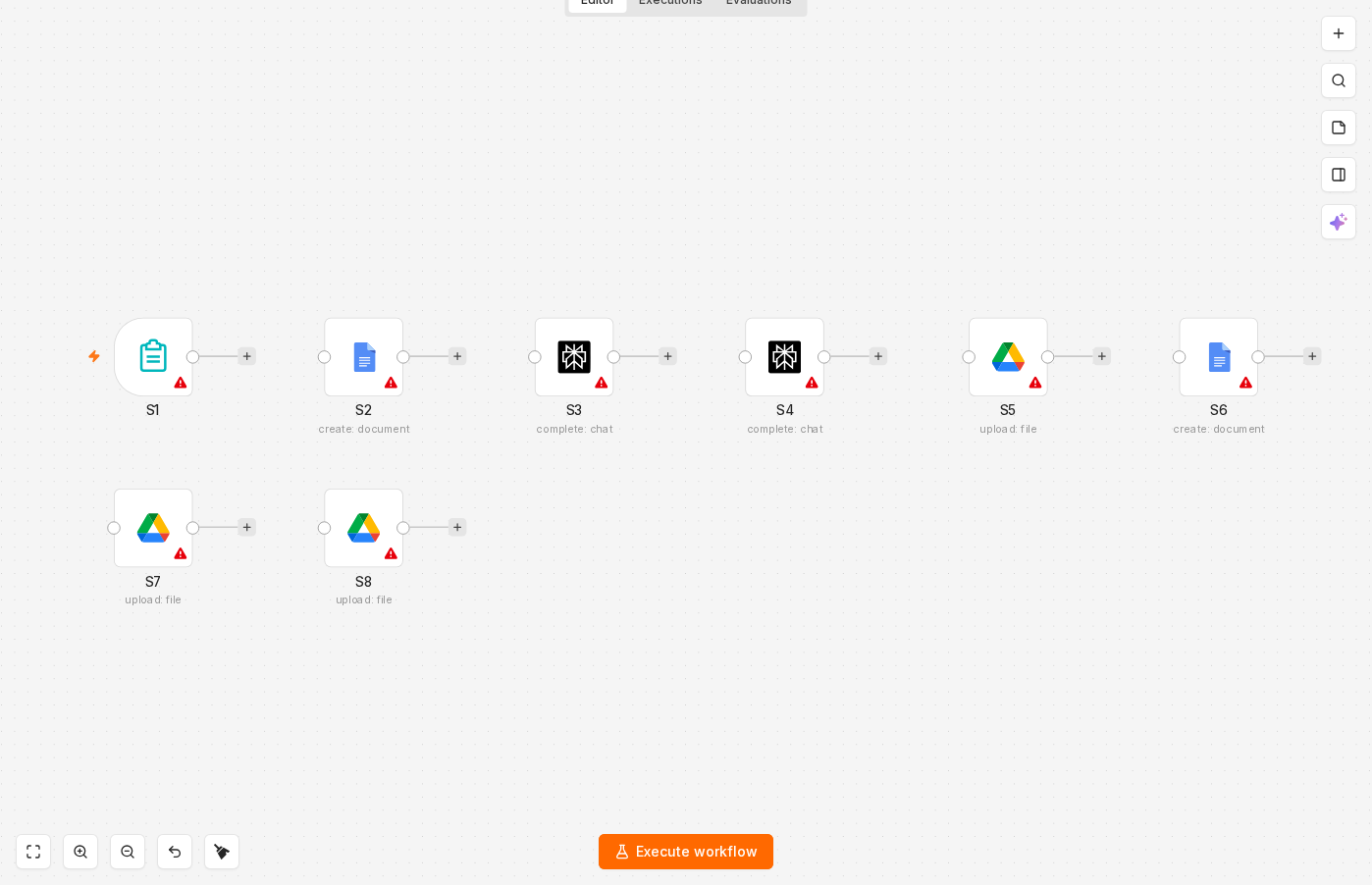
The nodes you will end up with, left to right, in the order you add them.
 4 things to set here
- 1Form Trigger — the trigger — everything starts here
- 2Google Docs — Pull in your base CV content
- 3Perplexity AI — Extract keywords from the job description
- 4Perplexity AI — Rewrite the CV summary and experience bullets
Skip the node hunting
Import a starter file with every node for this build already on the canvas, named after its step and wired in order, each one carrying a sticky note with the values to enter. You still connect your own accounts and fill the fields — that is what the walkthrough takes you through — but you never start at a blank canvas.
In n8n: Workflows → Import from file.
What you will build
Jump straight to any step, or print the list and tick it off beside your n8n tab.
- 1Start with a manual trigger for a job description
- 2Pull in your base CV content
- 3Extract keywords from the job description
- 4Rewrite the CV summary and experience bullets
- 5Copy the CV template into a new document
- 6Fill the new document with the tailored content
- 7Export the finished CV as a PDF
- 8Save the PDF to an applications folder
- 9Run it against a real job description and check it carefully
- 10Run with a job description close to your real experience
- 11Run with a job description that's a stretch
- 12Open the exported PDF
If something goes wrong
Everything ready?
Start walkthrough